
A sovereign AI stack
with model independence
Five elements, one job each. Run it with Orion. Build it with Compass. Store it with Carina. Protect it with Vela. Use it with an AI Architect in Residence from Catalyst.
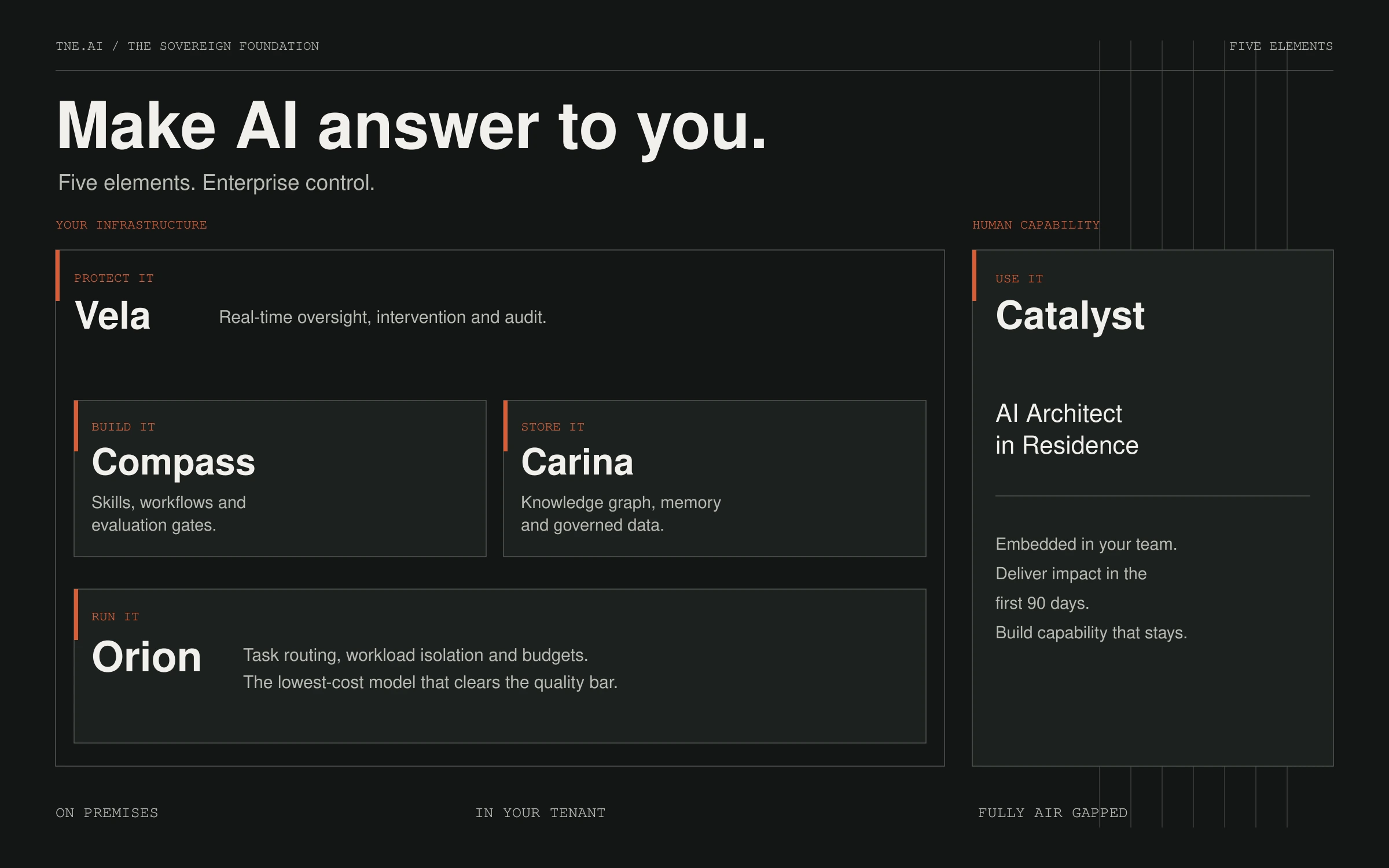
Five elements. One job each.
Orion
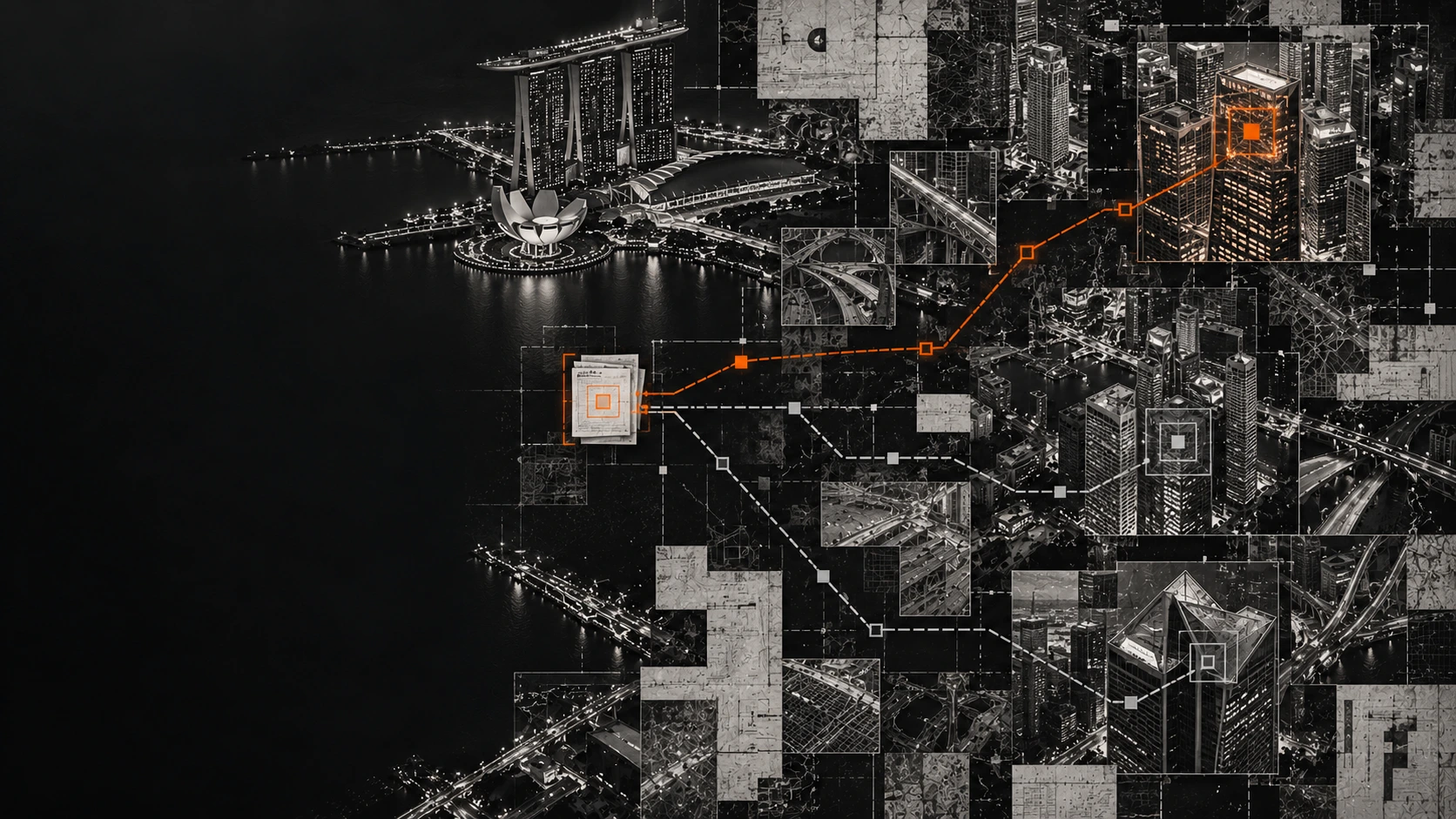
Orion is the kernel underneath the stack. It schedules every agent action, isolates every workload, enforces cost and time budgets, and routes each task, on premises or fully air gapped, to whichever model clears the quality bar at the lowest cost, so the enterprise is never locked to one model's price or one cloud's terms. Open models deliver 90% for 10% of the cost and the small ones run on a PC or a phone, so the choice of model becomes a cost and quality decision the enterprise makes task by task. Orion's zero knowledge infrastructure keeps the data inside the tenant.
Compass
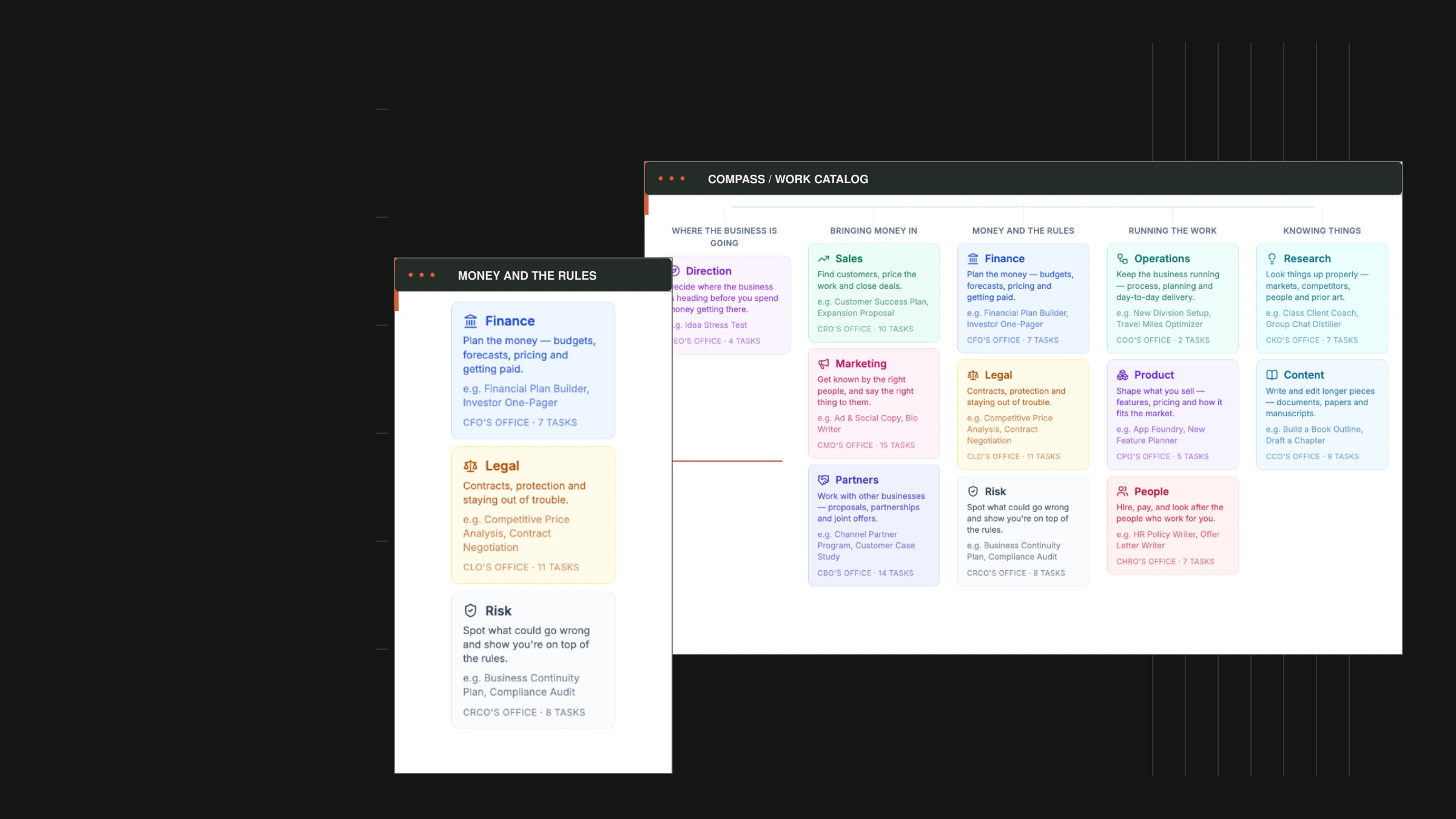
Compass is where the work starts. Knowledge workers build skills and run governed workflows in plain language, and nothing ships as a single unchecked output, because every result has to clear evaluation gates before it reaches a business process. The people who know the work are the ones who build the skills, so they stay in charge of how AI does their job, and that is what gets a team to adopt it. They start from 2,500+ agents and 250+ end to end processes already on the platform. In our 30-task internal TNE benchmark a cheaper model with Compass beat the most expensive model run bare, with 10 points more accuracy at 38% lower cost.
Carina
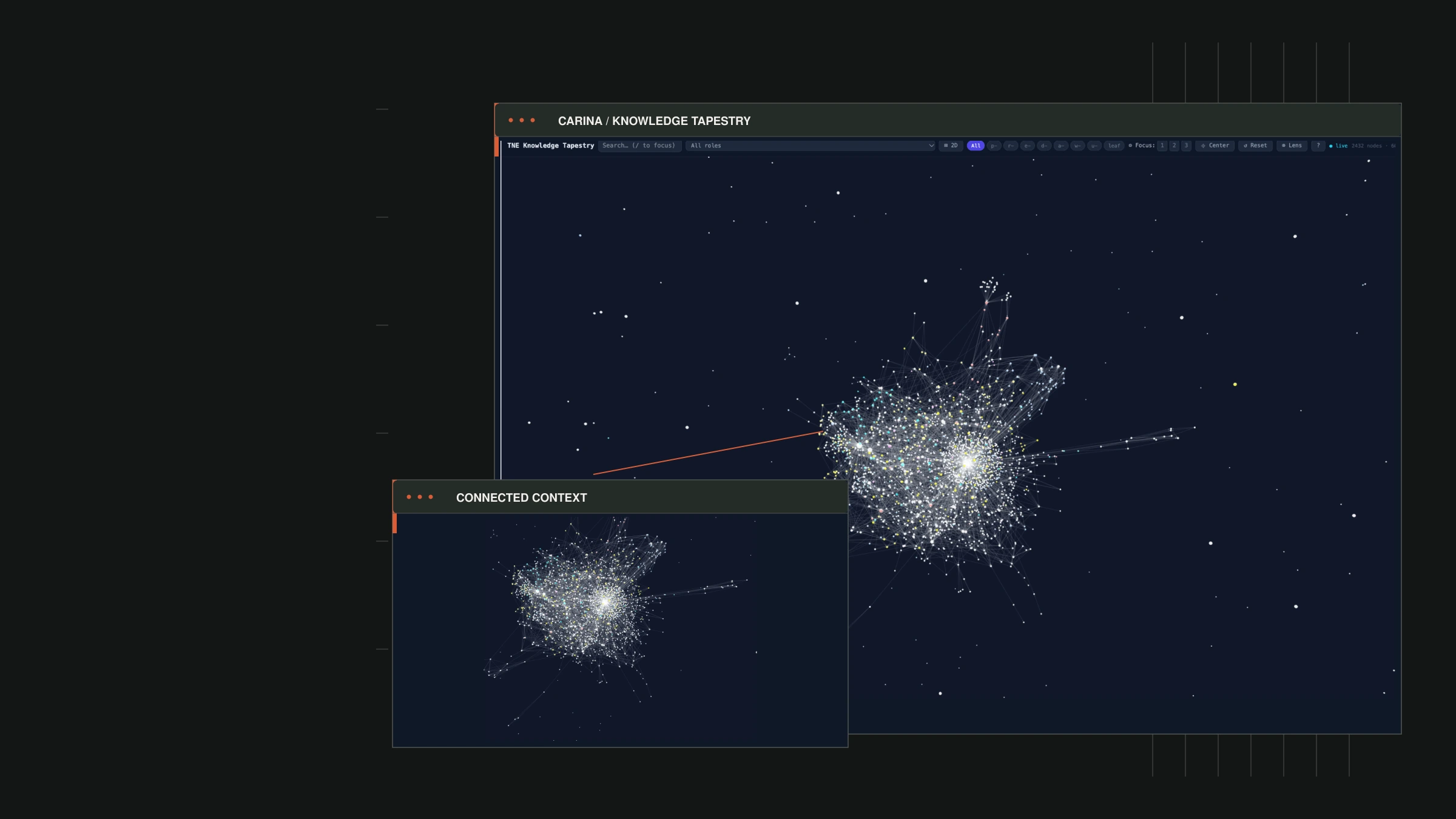
Carina is the data arbiter of the stack. It holds the enterprise's knowledge graph — its governance, taxonomy, rules and terminology; its customers, contacts and accounts; and how the people, companies, deals and documents in the business relate to each other — together with persistent agent memory and structured data. It is the only door through which an agent reaches the company's databases. An agent never holds a database credential. It asks, Carina checks the policy, redacts whatever the rules mark as sensitive, runs the query, and writes down every step. When the work needs a new database, Carina creates it in one call with governance already inside: columns classified, tenants scoped, a compliance report from the first row. The enterprise sees its whole data estate on one map, shown as a visual graph a person can open and explore. Agents work from the same shared graph, so the business never reintroduces itself to a model from scratch, and the compliance office reads the same record the agents write. Nothing an agent does with data happens off the books.
Vela
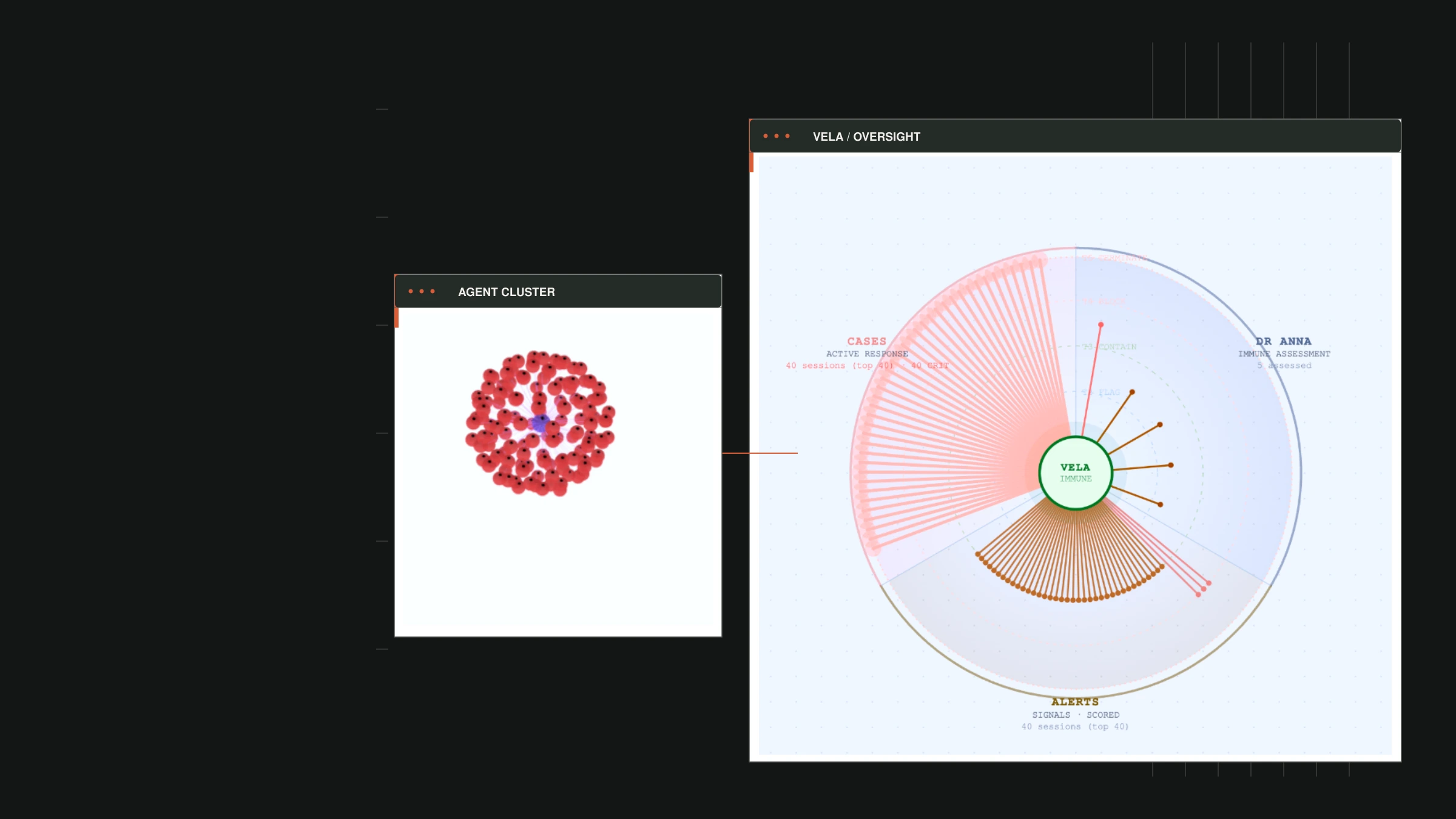
Vela is why the rest of the stack can run unattended. Every agent Orion schedules acts at machine speed, faster than any human reviewer or audit, so the only thing that can stop a bad action in time runs at that same speed. Vela watches every agent in real time and can stop one before it finishes, keeping risk bounded in your most mission critical systems: governance enforced at the moment an agent acts, not checked afterward. The enterprise sets the rules once and Vela applies them to every agent, so the people accountable for risk stay in control as the number of agents grows. Every step is signed, so there is a record of what each agent did.
Catalyst
Catalyst is the one product that is a person and not software: an AI Architect in Residence, embedded in your team, because a stack this capable is only as good as the judgment applied to it, and that judgment has to transfer, not stay dependent on TNE. Our architects are trained to make an impact in the first 90 days. They work the real full stack with the team, which means users, competition, reuse, security, testing and safety and not only the application. AI gets a team to 90% fast, but what it produces carries debt that has to be cleaned up before it can run the business, and the leading edge keeps moving. The architect closes that gap and teaches the team to close it. People adopt AI when they believe they can direct it, so the architect builds that confidence through small wins on real work.

In our 30-task internal TNE benchmark, a cheaper model with Compass beat the most expensive model run bare.
The first conversation is about your work, not our software
Tell us the one process you most need to own, and an architect will show you what open and sovereign AI does with it — running in your own environment.
You talk to an AI architect, not a sales rep.